
What Fruits Can Dogs Eat? A Safe, Practical Guide
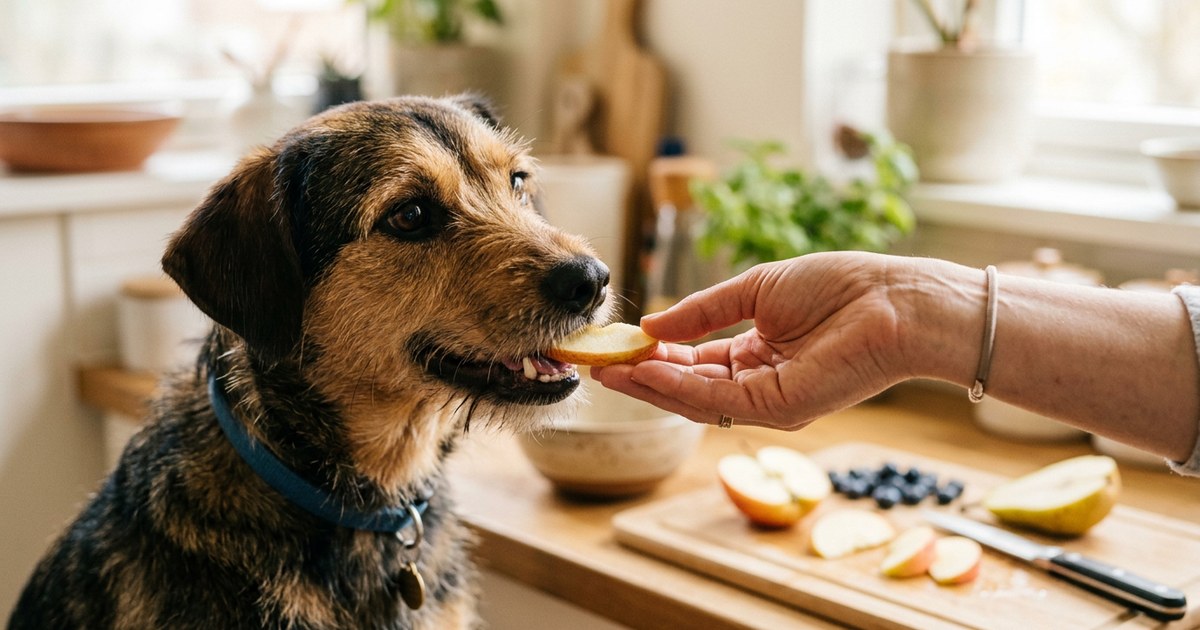
What fruits can dogs eat? Quite a few, actually. Apples, pears, bananas, blueberries and watermelon all make good treats when you prepare them properly. A few fruits, though, should never reach your dog's bowl, with grapes and raisins at the top of the list. Here is a clear guide to the safe ones, the risky ones, how to serve them and how much is enough.
Which fruits are safe for dogs?
These fruits are fine for most healthy dogs as an occasional treat, cut into small pieces:
- Apples: remove the core and seeds.
- Pears: bite-size chunks, no seeds or core, and skip canned pears in syrup.
- Bananas: peeled and in small amounts, since they are high in sugar.
- Blueberries and strawberries: washed, whole or halved depending on your dog's size.
- Watermelon and cantaloupe: no rind and no seeds. Cantaloupe is sugary, so keep it small.
- Mango: flesh only, never the pit.
- Peaches: flesh cut fully away from the pit, never canned.
- Pineapple: fresh, with the spiky skin and crown removed.
- Oranges: peeled segments without seeds, in small portions.
- Kiwi: peeled and chopped.
Can dogs eat pears?
Yes, and they are one of the easiest fruits to share. Slice them into small pieces and take out the seeds and core, because pear seeds contain traces of cyanide-releasing compounds. Canned pears usually come with added sugar, so fresh is better.
Can dogs eat persimmons?
A little ripe persimmon flesh is generally well tolerated. The concern is the seeds and skin, which can cause an intestinal blockage, especially in small dogs. If you share some, peel it, remove every seed and offer just a couple of pieces. If your dog eats whole persimmons from a tree or the ground, call your vet and watch for vomiting, loss of appetite or belly pain.
Can dogs eat mamey sapote?
This one deserves caution. There is no veterinary research on mamey flesh for dogs, and its large seed has been described as toxic to dogs, on top of being a choking and blockage hazard. Our advice is to skip it. A lick of flesh is unlikely to cause trouble, but if your dog swallowed the seed or a piece of it, check with your vet.
Which fruits should dogs avoid?
- Grapes and raisins: they can cause acute kidney failure and no amount has been shown to be safe. If your dog ate any, call your vet right away, even if they seem fine.
- Cherries: the pit, stem and leaves contain cyanide. Only the flesh is harmless, so it is easier to avoid them.
- Avocado: the pit, skin and leaves contain persin, and the fatty flesh can upset the stomach or contribute to pancreatitis.
- Lemons and limes: very acidic, and the peel is the worst part.
- Wild berries you cannot identify: many look like toxic species.
- Pits and seeds in general (peach, plum, mango, apricot): they can get stuck in the stomach or intestines.
Watch processed foods too: fruit in syrup, jams and anything sweetened with xylitol, which is dangerous for dogs.
How much fruit can a dog eat?
Vets use a simple rule: treats, fruit included, should stay under 10% of your dog's daily calories. The other 90% should come from a complete and balanced dog food. For a small dog that means a few small pieces a day; a large dog can have a bit more, but never a bowl of fruit.
Three tips for getting started:
- Introduce one new fruit at a time, in a small amount.
- Wash it, remove tough peels, seeds and pits, and cut it small.
- Watch your dog for the next 24 hours for diarrhea or vomiting.
If your dog has diabetes, is overweight, has kidney issues or eats a prescription diet, ask your vet first.
FAQ
Can fruit replace my dog's regular food?
No. Fruit is an extra. A complete and balanced dog food is still the foundation of the diet.
Can dogs eat banana peels or watermelon rind?
Better not. Both are hard to digest and can cause a blockage.
My dog ate one grape. Is that serious?
It can be. There is no proven safe amount, so call your vet or an emergency clinic straight away.
Is frozen fruit a good treat?
Yes. Small frozen pieces of watermelon, blueberries or banana are great on hot days, in moderation.
Sources
Original source: akc.org