
Can Dogs Eat Onions or Garlic? The Risks
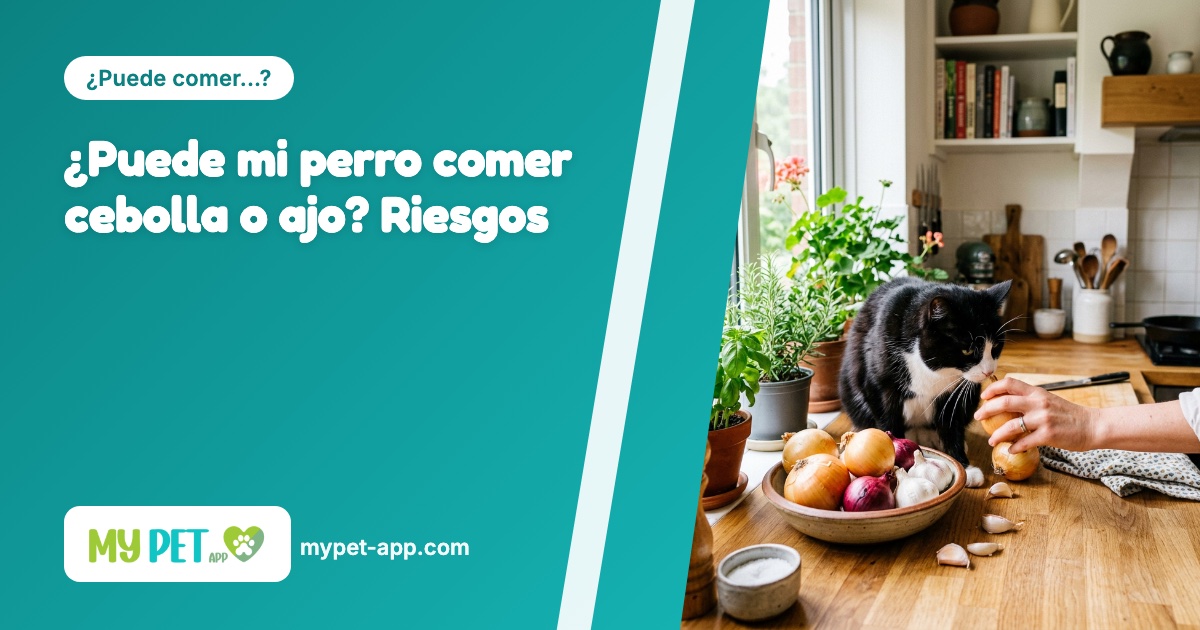
No, dogs and cats should not eat onions or garlic. These foods and their relatives (chives, leeks, onion powder) damage red blood cells and can cause anemia, and cats are even more sensitive than dogs. A single accidental lick rarely causes serious trouble, but because the risk depends on the amount and the size of your pet, it is worth calling your veterinarian.
Quick summary
- Onions, garlic and chives damage red blood cells and can cause anemia.
- Cats are more sensitive than dogs.
- Onion or garlic powder, bouillon packets and sauces count too.
- Signs of anemia can take days: call even if your pet looks fine.
Why are onions and garlic toxic to dogs and cats?
According to the ASPCA, onions, garlic and chives irritate the digestive system and damage red blood cells, which can end in anemia. Cats are more susceptible, but dogs are also affected depending on how much they eat. Every form is a risk: raw, cooked, dehydrated and powdered, and concentrated forms such as garlic powder or soup packets can weigh more than the fresh piece.
Which foods contain onion or garlic without you noticing?
| Food | Contains onion or garlic? | Risk |
|---|---|---|
| Sofrito, sauces and stews | Almost always | High if large amounts are licked up |
| Pico de gallo, salsa or chimichurri | Yes, raw onion or garlic | High |
| Broths and soups (including packets) | Often, as powder | Moderate to high |
| Empanadas, tacos, pizza, burgers | Often | Moderate |
| Garlic bread, dressings and ready-made sauces | Yes | Moderate to high |
| Baby food | Sometimes | Check the label |
That is why sharing your plate with your pet is a bad idea: "plain" food almost always has something from the onion family.
How much onion or garlic is dangerous?
There is no single safe figure, and the sources we checked do not give a universal dose. It depends on weight, species and form (powder is more concentrated), and sensitivity varies from animal to animal. In a cat, a small piece can already matter; in a large dog, a lick of sauce is different from a whole onion. If you do not know how much was eaten, treat it as a possible poisoning and call your vet.
What signs does it cause and when?
- Digestive: vomiting, diarrhea, drooling, belly pain and loss of appetite, which can appear within the first hours.
- Anemia: lethargy, weakness, pale gums, fast breathing, dark-colored urine. These signs can take several days to show, so a pet that seems fine at first can get sick later.
- In severe cases, fainting or collapse.
What should I do if my pet ate onion or garlic?
- Remove what is left and work out what and how much was eaten; keep the packaging if it was a product.
- Write down the time and your dog's or cat's weight.
- Call your veterinarian. They may ask you to come in right away or to watch your pet and run blood tests over the next few days.
- Do not induce vomiting or use home remedies without professional advice.
When to see a vet: always when a cat ate onion or garlic, or a dog ate a significant amount, a whole onion or garlic powder. Right away if there is repeated vomiting, lethargy, pale or white gums, fast breathing or dark urine. Even if your pet looks fine, ask whether a recheck in a few days makes sense.
Which vegetables are safe?
Cooked carrot, plain cooked pumpkin or squash, cucumber and cooked green beans are usually safe in small portions. Never cook them with onion or garlic. Learn more options in What Fruits Can Dogs Eat? and see the other kitchen dangers in toxic foods for dogs.
Can I add garlic or onion to homemade pet food?
No. If you prepare homemade food for your pet, ask your vet or a veterinary nutritionist for a complete recipe and avoid seasoning: salt, onion and garlic add nothing and are a risk. Cook your pet's portions separately, before adding the family's seasonings.
Frequently asked questions
Is it true that a little garlic works as a flea repellent?
There is no evidence that it works, and garlic can damage red blood cells. For fleas and parasites, ask your vet about a safe and effective product.
Are cats more sensitive than dogs?
Yes, according to the ASPCA cats are more susceptible, so keep them away from any food with onion or garlic.
How many days should I monitor my pet?
Ask your vet: since anemia can show up days later, sometimes they ask you to watch closely or repeat a blood check.
Does cooking make onion safe?
No. Cooked, fried or powdered, it is still a risk for dogs and cats, so do not share it in any form.
What if my cat licked sauce or broth with onion?
Even if it was little, call your vet: cats are more sensitive and broths or sauces may contain onion powder, which is more concentrated.
Remember that every pet is different: the amount, the form in which the onion or garlic was eaten and the size of the animal all change the risk. When in doubt, your veterinarian is the best person to tell you whether watching is enough or a blood test makes sense. It is a quick call that can prevent a bigger complication.
To check what is in the kibble and treats you give, the scanner in the MyPet app reads the label and flags ingredients worth avoiding.
Sources
Original source: aspca.org