
Can You Bathe a Cat? When It's Needed and How to Do It
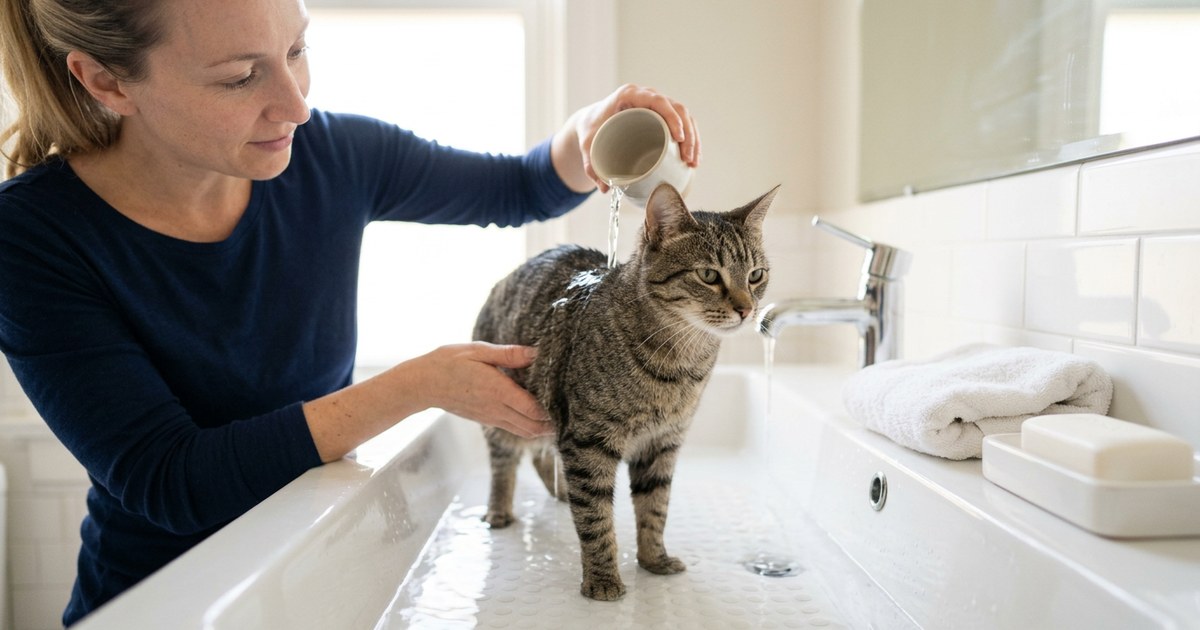
Can you bathe a cat? Yes, you can bathe a cat, but most cats rarely need it. Cats spend a big part of their day grooming, and their tongue does an impressive job. Baths are for specific situations. Here is when one makes sense, how to do it step by step with as little stress as possible, and what to try instead.
Do cats need baths?
Usually not. Most cats keep themselves clean, and what helps them most is regular brushing: it removes loose hair, prevents mats and cuts down on hairballs. A bath "just because" offers no real benefit and stresses your cat out.
When should you bathe a cat?
- They got into something sticky, smelly or harmful, like oil, paint or grease, that they could swallow while grooming.
- Your vet recommends it, for example a medicated shampoo for a skin condition or parasites.
- They cannot groom properly: older, arthritic or overweight cats that cannot reach some areas.
- Hairless breeds like the Sphynx, whose skin builds up oil.
- Long-haired cats with a soiled rear end.
Outside of messes or vet instructions, avoid bathing more often than every four to six weeks, because frequent baths dry out the skin.
What shampoo is safe for cats?
Cat shampoo only. Human shampoo, baby shampoo included, and dog shampoo can irritate a cat's skin, which has a different pH, and they are not safe to lick off afterward. If your vet prescribed a medicated shampoo, follow their contact-time instructions.
How to bathe a cat, step by step
- Set everything up first: cat shampoo, a non-slip mat, a cup or pitcher for rinsing, a large towel and a washcloth for the face.
- Trim the nails and brush out tangles. Wet mats are nearly impossible to remove.
- Pick a calm moment, such as after a play session. A helper makes it much easier.
- Fill the sink or tub with a few inches of lukewarm water before you bring your cat in. Running water scares most cats.
- Wet them with the cup, working from the neck to the tail. Don't dunk them or pour water over their head.
- Lather the shampoo from neck to tail, staying clear of the eyes, ears and mouth.
- Rinse thoroughly until no shampoo is left, since residue irritates the skin and will get licked.
- Clean the face with a damp washcloth only.
- Dry quickly with the towel and keep them in a warm, draft-free room until fully dry. Use a hair dryer only if they tolerate it, on the lowest setting and at a distance.
- Reward them with a treat, affection or play.
Alternatives to a full bath
- Regular brushing: the best way to avoid baths altogether.
- Spot cleaning with a cloth dampened in lukewarm water for a single dirty patch.
- Cat-specific grooming wipes for light dirt.
- A groomer or your vet clinic if your cat panics or turns aggressive at bath time.
When should you not bathe a cat?
- If your cat is sick, lethargic or extremely stressed: check with your vet first.
- If they got into something toxic and already show signs like drooling, vomiting or trembling: call your vet before doing anything else.
- If the room is cold or you can't dry them properly.
- If the bath puts you at risk of serious bites or scratches: leave it to a professional.
FAQ
How often can I bathe my cat?
Only when needed. Without vet instructions, no more than once every four to six weeks.
Can I use baby shampoo on my cat?
No. Always use a shampoo made for cats.
How warm should the water be?
Lukewarm, just a little above body temperature to the touch. Never hot.
Can you bathe a kitten?
Only if necessary and very carefully, since kittens get cold fast. Ask your vet before the first bath.
Sources
Original source: petmd.com