
My Cat Won't Eat: Causes and When to See a Vet
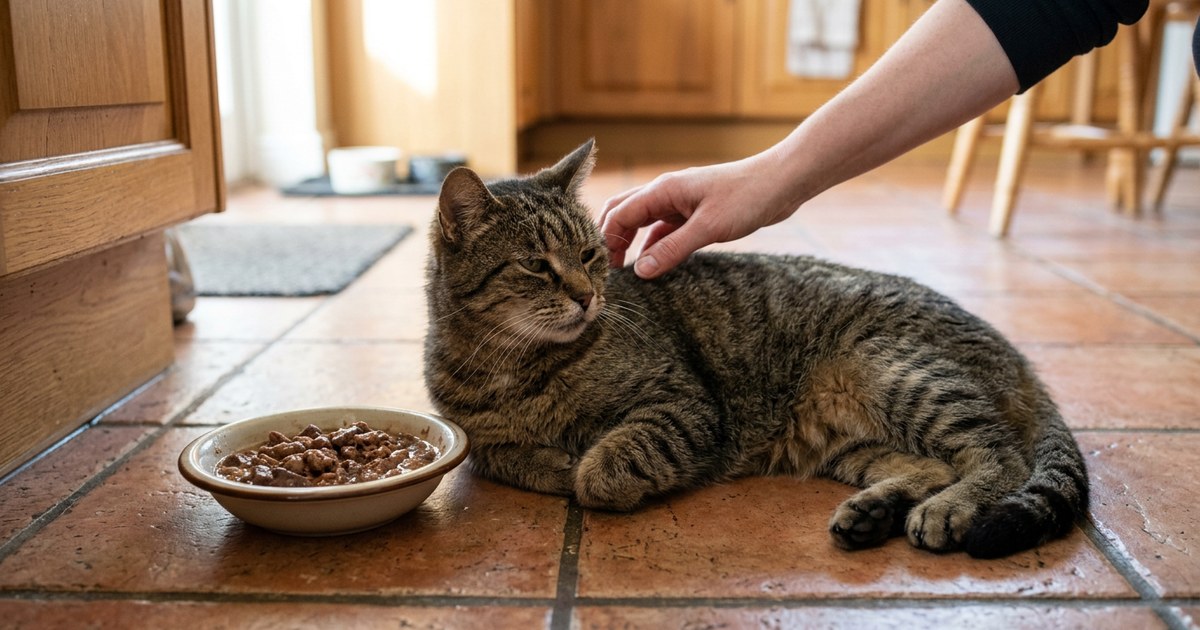
If your cat won't eat, it is not something to wait out for days. Unlike dogs, cats that stop eating can develop a serious liver problem surprisingly fast. This guide covers why cats stop eating, what you can check at home and when to head to the vet right away.
Why is my cat not eating?
Vets split this into two situations. In the first, your cat is hungry but cannot eat because something hurts. In the second, your cat has lost interest in food.
Wants to eat but can't
- Dental problems: inflamed gums, loose teeth or periodontal disease.
- Sores or inflammation in the mouth or throat.
- Jaw pain, or pain elsewhere, such as a sore back that makes bending to the bowl hard.
- Growths or tumors in the mouth.
Has lost their appetite
- Stress: a move, a new pet, guests, a change in routine or losing someone in the family.
- A new food they dislike, or food that has gone stale.
- Nausea from any cause.
- Infections or illnesses such as diabetes or kidney disease.
- A blockage in the gut, for example from swallowed string or toys.
- Poisoning.
- A blocked nose, such as with a cat cold: if they can't smell food, they often won't eat it.
- Side effects of a medication.
- Very hot weather.
Why is it dangerous when a cat stops eating?
When a cat stops eating, the body starts pulling fat from its reserves for energy. A cat's liver is not built to handle that much fat at once, so it builds up inside the liver cells. The result is hepatic lipidosis, or fatty liver disease, which can be fatal without prompt treatment. Overweight cats are at higher risk, but it can affect cats of any age or size.
A practical rule: if your cat has eaten nothing for more than 24 hours, call your vet. VCA advises contacting a vet immediately if a cat has refused food for more than two days, and it is better not to get that far, especially with kittens, senior cats or overweight cats.
What can I check at home?
- Is your cat eating a little or nothing at all? Note when it started and how much. Your vet will want to know.
- Are they drinking and using the litter box? Check that they pee and poop normally.
- Has anything changed? New food, a move, another pet, visitors.
- Check the bowl: wash it, offer fresh food and place it somewhere quiet, away from the litter box and other animals.
- Try wet food at room temperature or slightly warmed: a stronger smell can tempt a reluctant eater.
What not to do: don't force-feed with a syringe or by hand. Your cat could inhale food into the lungs, and it can make them dislike food even more. And never give human medicines, as several are toxic to cats. Any treatment should come from your vet.
When should my cat see a vet right away?
- They have eaten nothing for more than 24 hours.
- They are vomiting, have diarrhea or seem very lethargic.
- Their gums, inner ears or the whites of their eyes look yellow.
- They are hiding, drooling or cry when touched.
- They strain in the litter box without producing urine, especially male cats: that is an emergency.
- They might have eaten something toxic, or string, a hair tie or a toy.
- They are a kitten, a senior or have a chronic illness.
What will the vet do?
Your vet will look for the cause with a physical exam and, if needed, blood work, X-rays or ultrasound. Treatment depends on what they find. Cats that have gone without food for a while sometimes need fluids and assisted feeding while they recover.
FAQ
How long can a cat go without eating?
Much less time than most people think. After 24 hours with no food, call your vet; beyond two days it is an emergency.
My cat isn't eating but is drinking water. Is that serious?
Drinking is good, but it does not prevent fatty liver disease. A cat that is not eating still needs to be checked.
Why does my cat eat treats but not their food?
The food may be stale or unappealing, or a sore mouth may be pushing them toward softer things. If it keeps happening, book a checkup.
Sources
Original source: vcahospitals.com