
Dog and Cat Vaccine Schedule for Chile
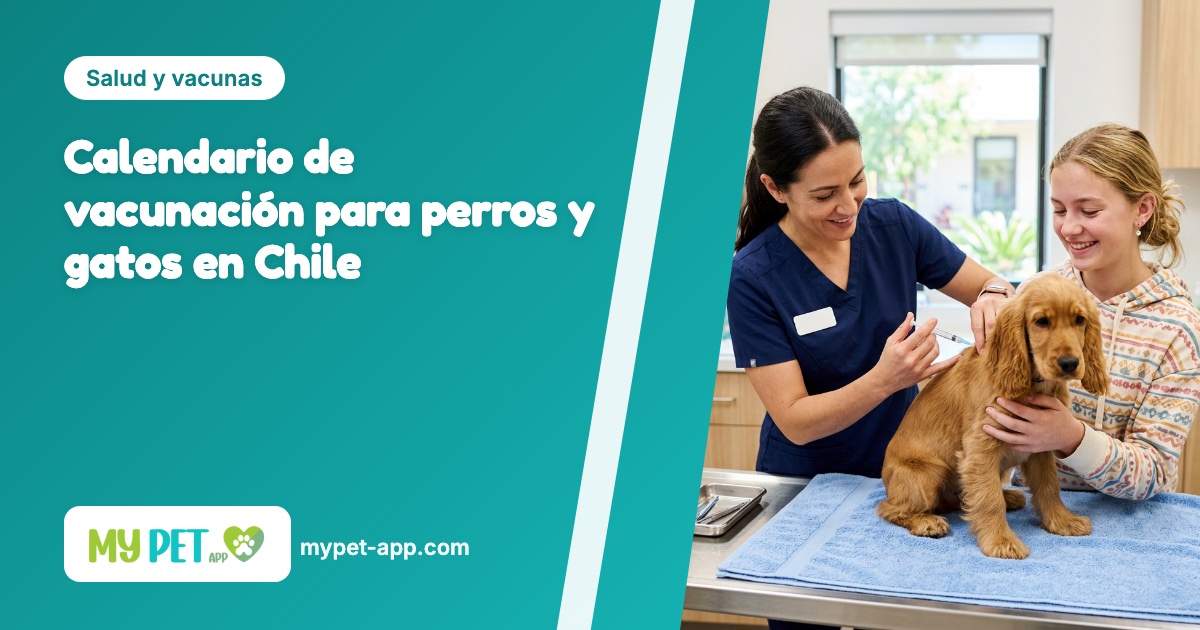
In Chile, a puppy or kitten gets its first combination vaccine at 6 to 8 weeks of age and repeats the booster every 3 to 4 weeks until 16 weeks; rabies is usually given from about 3 months (your vet confirms the age) and a yearly booster is recommended. After that, the combination vaccine is boosted at 6 months and then, in general, every 3 years depending on risk. Your veterinarian adjusts this schedule to your pet's age, lifestyle and where you live.
What is a puppy's vaccine schedule in Chile?
WSAVA guidelines (the World Small Animal Veterinary Association) recommend starting core vaccines no earlier than 6 weeks and repeating them every 3 to 4 weeks until 16 weeks or older, because until then the defenses a puppy received from its mother can interfere with the vaccine.
| Age | Dogs | Cats |
|---|---|---|
| 6 to 8 weeks | First combination vaccine (distemper, parvovirus, adenovirus) | First feline combination (panleukopenia, herpesvirus, calicivirus) |
| 10 to 12 weeks | Second combination dose | Second combination dose |
| 12 to 16 weeks or older | Last dose of the series (at 16 weeks or later) and rabies, usually from about 3 months | Last dose of the series (16 weeks or older) and rabies as your vet advises |
| 6 months | Combination booster | Combination booster |
| Every year | Rabies; leptospirosis if your vet recommends it | Rabies as your vet advises; combination more often in higher-risk cats |
| Every 3 years | Combination booster, no more often than every 3 years | Combination booster in low-risk cats |
Exact dates depend on the vaccine brand and your vet. This table is a reference guide, not a prescription.
Is the rabies vaccine mandatory in Chile?
Chile's Ministry of Health asks owners to check that their dogs and cats have their yearly rabies vaccine up to date, and regional health offices (Seremi de Salud) run free vaccination days across all 16 regions, usually around World Rabies Day in late September. The WHO recognized Chile as the first South American country to eliminate rabies transmission from dogs to people, and there have been no human cases of the canine variant since 1972. Even so, bats remain a reservoir that can infect dogs and cats, so keeping up vaccination matters. The rabies certificate is also essential if you travel with your pet: Chile's SAG requires it to issue the export zoosanitary certificate. To find a free vaccination day near you, check your regional health office or your municipality.
What vaccines does an adult dog need?
- Combination (six- or eight-way): protects against diseases such as distemper and parvovirus. After the 6-month booster, the WSAVA advises not revaccinating more often than every 3 years.
- Rabies: every year, or as the vaccine duration and local rules indicate.
- Leptospirosis: the WSAVA treats it as core where the disease is endemic; two doses 2 to 4 weeks apart and then yearly.
- Others (kennel cough, etc.): optional depending on lifestyle, for example if your dog goes to daycare or boarding.
What about cats?
The feline combination vaccine is core worldwide according to the WSAVA. Cats that go outside or live with many cats may need more frequent boosters, even yearly. An indoor cat still needs vaccines: infection can arrive on your shoes or through a window. And before adopting or neutering, it helps to have vaccines up to date; see spaying and neutering your cat.
How much do vaccines cost in Chile?
Prices are references and vary by clinic, district and animal size. According to a price site updated in April 2026 (indicative values, Chilean pesos):
- Vaccine per dose: between CLP 9,000 and 15,000.
- Rabies: between CLP 9,000 and 12,000.
- Annual vaccine package: between CLP 25,000 and 45,000.
Ask your municipality about free vaccination days and the sterilization and registration program. In Spaying or Neutering Your Dog you will find how to decide on sterilization in Chile and Latin America.
When to see a vet: before starting the schedule if you adopted a puppy or kitten, and immediately if after a vaccine you see facial swelling, trouble breathing, repeated vomiting, marked lethargy or hives. If in doubt whether a sick pet can be vaccinated, ask first.
Frequently asked questions
At what age is a puppy first vaccinated?
From 6 to 8 weeks of age, with boosters every 3 to 4 weeks until 16 weeks or older, according to the WSAVA.
Can I walk my puppy before the vaccine series is done?
Ask your vet. In general contact with unknown dogs and busy places is avoided until the series is complete, but early socialization is also important and can be done carefully.
How often is an adult dog vaccinated?
Rabies every year; the combination every 3 years after the 6-month booster, according to the WSAVA, unless your vet says otherwise.
Where do I keep vaccine records?
What do I do with an adopted dog or cat with no records?
Take your pet to the vet: without a record of previous doses, the safest approach is usually to treat it as unvaccinated and start a series according to its age.
Remember that this schedule is a general reference: your veterinarian may bring doses forward or space them out depending on your pet's age, health and risk.
With the certificate the clinic gives you and a copy on your phone. In the MyPet app you can log every vaccine and get reminders before the next one is due.
Sources
Original source: wsava.org