
New Year Fireworks: How to Calm Your Dog and Cat
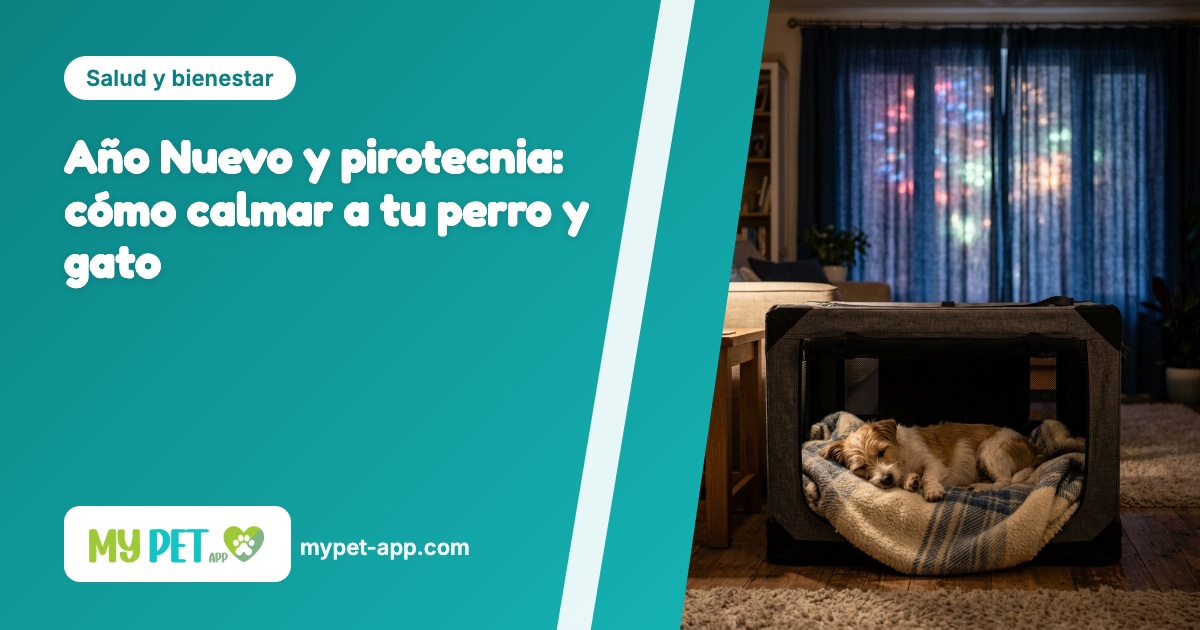
To help your pet on New Year, keep it indoors in an interior room without windows, with soft music and something to do, make sure it wears ID and a microchip with up-to-date contact details, and do not take it out during the fireworks. If you know your pet is very fearful, talk to your veterinarian weeks ahead: your vet can recommend a treatment and try it before that night.
Quick summary
- Interior room without windows, soft music and something to do.
- ID with current details and a registered microchip.
- If the fear is intense, talk to your vet weeks ahead.
- Check that your pet has not eaten fireworks debris or party food.
Why do fireworks scare dogs and cats so much?
Dogs and cats hear higher-pitched sounds and from farther away than people, and the booms are unpredictable. In Chile and Argentina, Christmas Eve and New Year are celebrated with fireworks and firecrackers that can go on for hours. A frightened animal may tremble, hide, pant, bark, destroy things or try to escape. Cats tend to hide, and although noise phobias are less common in them, they do occur.
What can I do before December 31?
| When | What to do |
|---|---|
| Weeks before | If your pet is already scared of noise, talk to your vet. If medication is recommended, the ASPCA advises giving a practice dose before the night to see how your pet responds, and never sharing medication with another pet or giving more than directed. |
| A week before | Check that the microchip is registered with your current phone and that your pet wears a collar with a tag, even if it lives indoors. |
| That day | Take the long walk early. Prepare the safe room and water; leave an anxiety vest or a snug t-shirt on if it helps your pet. |
| During the fireworks | Keep your pet inside, windows closed, in an interior room, with soft music or the radio or TV on. |
| Afterward | Pick up firecracker debris from yards and streets before going out with your pet, and check that it has not eaten anything. |
How do I set up a safe room?
- Choose an interior room, without windows if possible, such as a large bathroom, a hallway or a ventilated closet.
- Play soft music or constant noise; the ASPCA suggests soft music.
- Leave a bed, a blanket that smells like you, water and a stuffable toy or chew to distract your pet.
- Do not shut your pet on a balcony, a patio or anywhere it could fall or escape.
- Stay with your pet if you can. Speak calmly and do not overdo the comforting.
- If it is a cat, keep it indoors and check on it; know its hiding spots.
What if my pet runs away?
A frightened animal can break a window screen or slip out an open door in seconds. If your pet gets lost, check the surroundings calmly, tell your neighborhood and post on social media, contact your local animal control and nearby vets, and share a recent photo. With a registered microchip and current details it is much easier to get your pet back. In Chile, registering the microchip is free of charge through the National Pet Registry.
What if my pet ate fireworks debris?
Some dogs eat anything, including firecrackers and sparklers. Fireworks contain chemicals and heavy metals, and the ASPCA recommends calling your vet right away if you suspect your pet ate them. Also watch the party table: alcohol can be fatal to a small dog, chocolates should be stored away and xylitol avoided in homemade treats, as the ASPCA advises for New Year.
When to see a vet: if your pet ate fireworks debris, alcohol, chocolate or anything with xylitol; if after the booms there is vomiting, drooling, intense trembling, panting that does not ease, injuries from trying to escape, or if the fear is so strong it hurts itself or does not settle for days. Intense noise fear is best treated with professional help.
Frequently asked questions
Should I take my dog out of the city on the 31st?
If you can, a quiet place away from fireworks helps, but traveling is stressful too. If you do, bring ID and do not let your dog off leash.
Do vests or t-shirts work?
The ASPCA says an anxiety vest may help in some cases, and if you do not have one, a snug t-shirt is an alternative.
Can I give a calming product?
Only if your veterinarian recommends it. Do not give human medication or another pet's medication.
What if I have guests at home?
Ask your guests not to leave doors or windows open, and offer your pet its safe room before they arrive. Guests can unknowingly bring dangerous foods, so ask them not to feed your pet.
What if my cat hides?
That is normal. Leave it in its hiding spot with water and litter nearby, and check on it from time to time without forcing it out.
Watch the party table too: see the toxic foods for dogs and our guide to traveling with your pet in Chile.
In the MyPet app you can save your pet's photo and details, and post a lost pet notice if it runs away.
Sources
Original source: aspca.org