
Pets and Summer Heat in Chile and Argentina
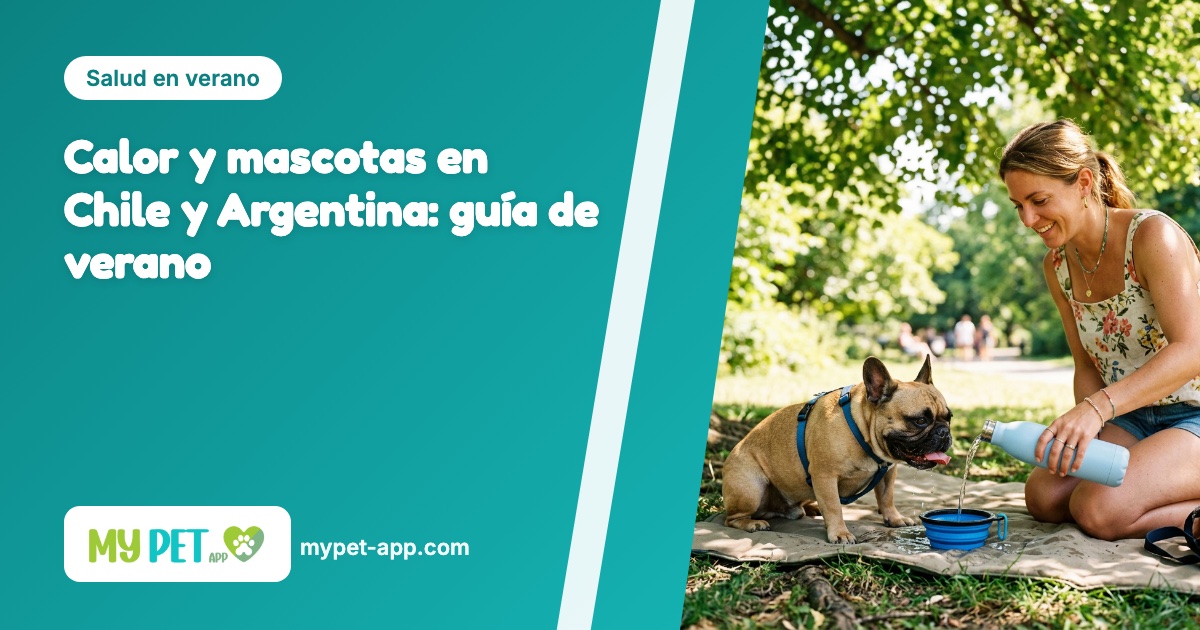
With the southern summer from December to February, the rule is simple: fresh water always, real shade, walks in the coolest hours and never leaving your pet in a parked car. Dogs and cats do not sweat like people and cool down mostly by panting, so heatstroke is a veterinary emergency that can strike within minutes, even on a day that does not feel extreme to you.
Quick summary
- Fresh water and real shade all day.
- Walk in the coolest hours and avoid hot asphalt and sand.
- Never leave pets in a parked car: in 10 minutes it can pass 100 °F (38 °C).
- If you suspect heatstroke, cool gradually and go to the vet right away.
When is it too hot for my dog or cat?
There is no single temperature, because it depends on humidity, breed, age and weight. During a heat wave in Santiago, Mendoza or Cordoba, or with the humid heat of Buenos Aires, a midday walk or a yard without shade can be dangerous. Animals at higher risk are puppies, seniors, overweight pets, flat-faced breeds (such as bulldogs, pugs and Persian cats) and those with thick or dark coats. The ASPCA adds that pets with heart or lung disease should be kept cool too, ideally in air-conditioned rooms.
How dangerous is leaving a pet in the car?
Very. The Merck Veterinary Manual notes that on an 85 °F (29 °C) day, the inside of a car can exceed 100 °F (38 °C) in just 10 minutes and 120 °F (49 °C) in 35 minutes. Cracking a window or parking in the shade does not make it safe.
| Minutes in a closed car (85 °F day) | Approximate inside temperature |
|---|---|
| 10 minutes | Over 100 °F (38 °C) |
| 35 minutes | Over 120 °F (49 °C) |
If you are running a quick errand, take your pet with you or leave it at home.
How do I plan walks and the day?
- Timing: walk early in the morning or in the late evening, avoiding the middle of the day.
- Pace: shorten the walk and lower the intensity; save running and fetch for cooler days.
- Water: always carry water and a portable bowl, and leave several clean bowls at home.
- Shade and airflow: if your dog lives in a yard, make sure there is shade all day, not just in the morning. Cats look for cool spots; leave tile floors or shaded corners.
- Coat: long hair can be trimmed, but do not shave down to the skin, because the coat protects from overheating and sunburn.
What about asphalt, beach sand and pools?
The Merck Veterinary Manual warns that hot asphalt and sand can cause severe paw burns, even third-degree burns. If you cannot hold your hand on the surface for a few seconds, your dog cannot walk on it. At the beach in Vina del Mar, Pichilemu, Mar del Plata or Pinamar, find an umbrella, bring fresh water and avoid the sunniest hours. If your dog swims, rinse afterward and offer fresh water so it does not drink salt water. Never leave a dog alone in a pool.
What are the signs of heatstroke?
- Very intense, noisy panting or trouble breathing.
- Drooling, vomiting, skin hot to the touch.
- Weakness, loss of coordination, stumbling.
- Very red or pale gums, fast heartbeat.
- Collapse, seizures or loss of consciousness.
What should I do if I suspect heatstroke?
- Move your pet right away to shade or a cool place and seek emergency veterinary care.
- Cool gradually with cool (not cold) water, wet towels or a fan.
- Do not submerge in cold water or cover with ice.
- Offer small amounts of water only once your pet starts to cool down.
- Call your vet while you travel so they are ready for you.
When to see a vet: always when heatstroke is suspected, even if your pet seems to recover. Some complications appear hours later. Also if you see paw burns, repeated vomiting or lethargy after being in the heat.
What do I bring to the country, the beach or a rural lot?
Bring plenty of fresh water, a portable bowl, an umbrella or awning, a towel to wet your pet and, if it will swim, a dog life vest. Avoid leaving it tied in the sun and check its paws and skin when you return. If it spends the day on a rural lot, make sure it has cool shade that does not move with the sun and that it cannot escape. For the coat, use only sunscreen or repellents labeled for animals.
Frequently asked questions
Can I wet my dog to cool it down?
Yes, with cool water, especially on the neck, chest and paws. Avoid ice-cold water and avoid covering your dog with a wet towel for long, because it can trap heat.
What about cats?
They suffer from heat too. Give them fresh water (many like a fountain), shade and cool spots. If you see a cat panting with its mouth open, that is a warning sign.
Is it safe to shave my dog in summer?
Long hair can be trimmed, but not shaved to the skin, because the coat protects from heat and sun. Ask your groomer or vet according to the breed.
How often should I change the water?
Several times a day; in the heat water warms quickly. A bowl that does not tip over and sits in the shade helps.
For coat care in hot weather, see Top Tips for Pet Grooming Success.
With the MyPet app you can find vets and emergency clinics near you, and keep your pet's health data handy for a summer emergency.
Sources
Original source: merckvetmanual.com